









Blog Summary: A mobile app can help startups improve engagement, support mobile-first experiences, and use features such as GPS, push notifications, and offline access. However, not every startup needs native mobile development from the start. The right choice depends on user demand, product maturity, business goals, budget, and technical needs. Responsive web apps and PWAs can help validate an idea before a larger mobile investment, while native apps make more sense when mobile is central to the user experience.
Building a mobile app can help a startup reach users, improve engagement, and create a stronger product experience. But timing matters. Build too early, and you may spend valuable budget on features your users do not need. Wait too long, and you could miss a chance to meet users where they already spend their time.
So, should your startup build a mobile app?
There is no one-size-fits-all answer. The right choice depends on your users, product stage, business goals, and budget. It also depends on whether your product needs mobile features such as GPS, camera access, push notifications, or offline functionality.
This guide looks at when startup app development makes sense, when a web solution may be enough, and what to consider before investing in mobile application development for startups.
A mobile app makes sense when it solves a clear user need or improves an important part of the product experience. Start by looking at how people use your product and what your product needs to do.
A mobile app may be a strong fit when:
Your users rely on mobile: Customers use their phones often and expect quick access.
Your product needs device features: GPS, cameras, sensors, biometrics, or push notifications are central to the experience.
Mobile improves engagement: Users need frequent updates, reminders, or real-time interactions.
Your product is ready to scale: You have validated demand and can support development and ongoing maintenance.
For example, a fitness app may need motion tracking, while a delivery platform may depend on GPS and real-time updates. In these cases, mobile is not simply another way to access the product. It is part of the experience.
A startup should consider waiting when the product is still being validated, or a web solution can deliver the same core value. This does not mean you should avoid mobile. It means you should build it when the need is clear.
Ask:
Are users asking for a mobile app?
Do they use your product frequently on mobile?
Is the current web experience limiting engagement?
Does your product depend on mobile-specific features?
Can you support both development and long-term maintenance?
If the answer is mostly no, start with the simplest solution that lets you test your idea. You can move into small business app development later when user demand and product data support the investment.
The biggest startup app development mistakes usually come from building too much, too soon. Avoiding these mistakes can help you protect your budget, shorten development time, and build a product users actually need.
A mobile app cannot fix an untested business idea. Before development starts, make sure you understand your target users, their needs, and the problem you want to solve.
What to do instead: Validate the idea with user research, prototypes, or a simple web MVP before investing in a full app.
Adding more features can increase development time, cost, and complexity. It can also make the app harder to use.
What to do instead: Start with the core features users need. Add more after you have real user feedback.
The cheapest option may not be the best fit for your product. Your choice of native, cross-platform, or web technology can affect performance, maintenance, and future growth.
What to do instead: Choose technology based on your users, product requirements, budget, and long-term plans.
Launching the app is not the end of development. Mobile operating systems change, bugs appear, and users expect regular improvements.
What to do instead: Include testing, updates, security, monitoring, and ongoing support in your app development plan from the start.
The right app development partner should understand your business goals, users, technology needs, and budget. Do not choose a provider based on price alone.
Look for:
Startup experience: Choose a team that understands tight budgets, fast testing, and changing product needs.
Relevant expertise: Check its experience with iOS, Android, cross-platform, web, and SaaS platform development.
Clear process: The provider should explain how it handles planning, design, development, testing, launch, and support.
Scalable solutions: Your app should be able to support more users and features as your business grows.
Ongoing support: Ask how the team handles updates, bugs, security, and maintenance after launch.
Transparent communication: Clear timelines, costs, deliverables, and regular updates can prevent costly surprises.
For mobile application development for startups, a good partner should also help you decide what to build first. The goal is not to create the biggest app. It is to build the right product, test it with users, and improve it as you grow. Acrosoft helps startups turn these goals into scalable mobile solutions, from MVP development to full-featured applications.
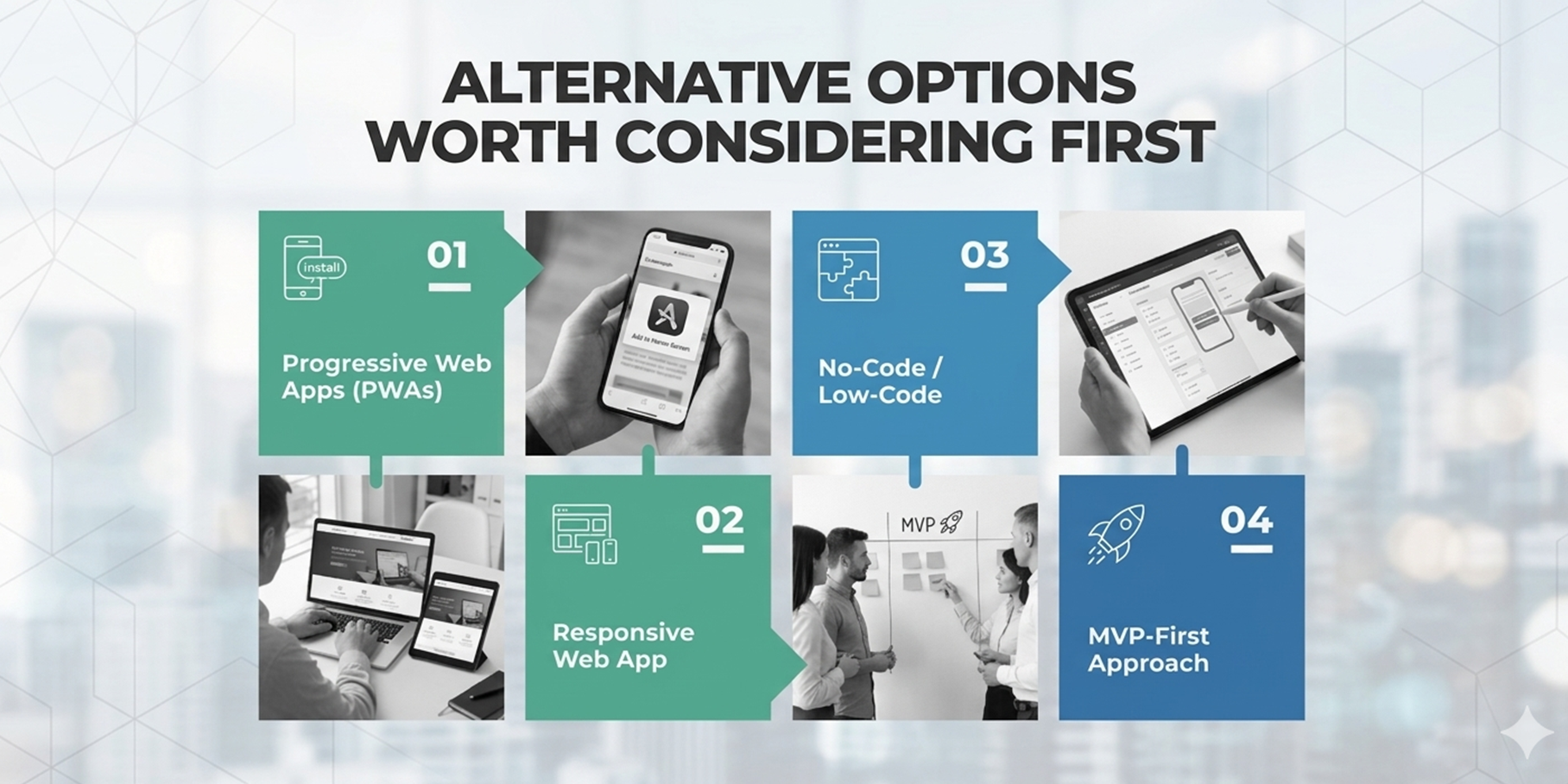
Startups can test their product with a web app or PWA before investing in native mobile development.
Responsive web app: A good starting point when users can access the product through a mobile browser. It is faster to update and works across devices.
Progressive Web App (PWA): Adds app-like features such as home-screen access and, where supported, notifications and offline use.
Low-code or no-code: Useful for simple prototypes, internal tools, and early product testing without building everything from scratch.
These options can help you validate demand and collect user feedback before committing to full startup app development.
Start with the simplest solution that meets your users' needs. Move to native mobile when the product and user demand justify the investment.
Choose a startup web app development company that can turn your idea into a scalable product without overcomplicating the first version. A strong partner should understand both your business goals and your users.
Before choosing a company, check:
Startup experience: Look for experience building MVPs and products for growing businesses.
Web development skills: Make sure the team can build secure, scalable, and responsive web designs.
Product thinking: A good partner should help you prioritize features instead of simply following a long requirements list.
Clear pricing: Get a clear view of development costs, timelines, and ongoing support.
Post-launch support: Ask how the company handles updates, testing, security, and future improvements.
If a web app can meet your users' needs, it may be the right first step. You can then invest in small business app development when mobile demand becomes clear.
The right mobile app solution depends on your users, product, budget, and growth plans.
A typical process includes planning, UI/UX design, development, testing, launch, and ongoing updates. Startups should define the MVP scope early and focus on the features users need most.
Choose technology based on product needs, not cost alone. Native development with Swift or Kotlin offers strong platform support. Flutter and React Native can help teams build for multiple platforms with a shared codebase.
Start with the platform your target users rely on most, or launch on both when demand supports it. Android offers broad device coverage, while iOS provides a more controlled platform environment.
SaaS mobile apps let customers access cloud-based products through their phones. They can support accounts, subscriptions, payments, dashboards, and notifications as part of a wider SaaS product.
Solutions can include MVPs, marketplaces, booking apps, fintech products, healthcare apps, and field-service tools. The right scope depends on the problem you need to solve.
Business apps can improve customer access, automate workflows, and support digital services. They can also connect with systems such as CRM, payments, inventory, and analytics.
Most startups do not need to build a full mobile app on day one. Start with the solution that helps you validate your product and understand your users. As demand grows, a mobile app can become a valuable way to improve engagement, expand functionality, and support business growth.
At Acrosoft, we provide mobile app development services for startups and businesses. We help teams plan, build, and scale mobile solutions around their users and business goals. If you're ready to explore mobile app development, contact us about your project.
Usually not. Early-stage startups should focus on validating the product, not the app. A web-based MVP is faster, cheaper, and easier to update. Only build a mobile app first if your product depends on mobile features like motion sensors, camera, or location services.
Look at retention (Day-30), session frequency, and user satisfaction. Compare ARPU and LTV-to-CAC on mobile vs web. If mobile users generate 2× or more value than web users, it’s worth building. If not, stick with the web.
Spending money before users truly need it.
Creating technical debt that slows future updates.
Dividing your team’s focus and slowing product-market fit.
Yes, for most startups. Responsive web apps (PWAs) handle almost all interactions at a lower cost. Build a native app only if you need offline use, hardware access, or real-time notifications.