








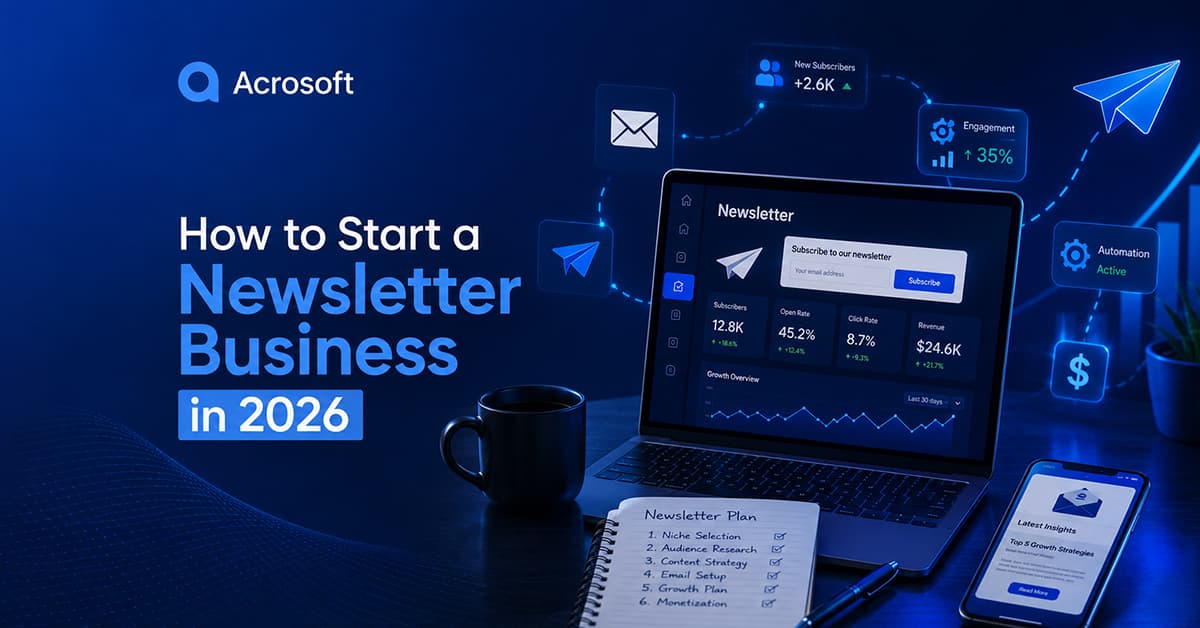
Starting a newsletter means picking a niche, choosing an email platform such as Substack, Beehiiv, ConvertKit, or Mailchimp, building a simple landing page, publishing consistently, and monetizing through ads, sponsorships, or paid subscriptions.
A newsletter can become a powerful business growth channel when backed by professional digital marketing services. From content planning and audience targeting to promotion and performance tracking, the right support can help turn your newsletter into a consistent source of traffic, engagement, and revenue.
Most successful newsletter operators say the biggest mistake is waiting too long to hit send. Below is a complete, practical guide covering everything from newsletter strategy to growth and monetization.
A newsletter is a recurring email sent to a list of subscribers who have opted in to receive updates, insights, or curated content on a specific topic. In the creator economy, this format is often called an "email newsletter business" or simply "newsletter media," and it now spans everything from independent writers to full-blown companies with dozens of employees.
Newsletters have exploded because email remains one of the few channels a creator or business fully owns. Unlike a social media following, a subscriber list can't be taken away by an algorithm change. Email marketing continues to deliver returns of roughly $36 to $42 for every dollar spent, according to Constant Contact's 2026 email marketing statistics report, which is far higher than most paid social or search channels. That combination of ownership and ROI is why so many writers, journalists, and small businesses are treating newsletters as a real business model rather than a side project.
Before outlining the steps, it's worth learning from people who have already built newsletters at scale. A recent roundup of more than 20 newsletter founders and editors from outlets like BuzzFeed, the Financial Times, WBUR, and The Browser surfaced several recurring lessons that apply to almost anyone starting a newsletter business in 2026.
Multiple operators regretted spending weeks polishing design and strategy before sending a single issue. The most valuable feedback comes from real readers, not internal planning meetings, so getting an imperfect first newsletter into inboxes early beats waiting for a polished version.
Writers who tried to serve everyone struggled, while those who narrowed their focus to a specific, underserved audience found consistent traction. A newsletter that tries to be for everyone usually resonates with no one.
Several successful newsletter writers said their biggest growth driver was two-way conversation with readers, such as regular reader polls or reply-based questions, rather than one-directional broadcasting.
Operators who waited years to formally ask subscribers what they wanted wished they had built feedback loops into their strategy from day one.
Because reported subscriber counts and income figures across the newsletter industry are frequently inflated, comparing your early numbers to a competitor's public claims is rarely useful or accurate.
Running a serious newsletter business involves expenses most beginners underestimate, from payment processing and deliverability tools to virtual assistants and legal setup, even if the eventual revenue outpaces those costs.
Multiple paid newsletter writers noted that readers are generally willing to pay for genuinely useful information, and holding back on monetization out of guilt usually just delays sustainable growth.

Building a newsletter business is a sequence of decisions, not a single launch event. Here is the complete process, from choosing a niche to scaling with partnerships.
Before anything else, decide exactly who your newsletter is for and what specific problem or interest it addresses. A newsletter about "marketing" is competing with thousands of others, while a newsletter about "email deliverability tactics for indie SaaS founders" has a defined, findable audience. Pick a niche narrow enough that you could name ten real people who would want it in their inbox tomorrow.
Once you have a niche, define your reader in detail: their job, their daily frustrations, what other newsletters or content they already consume, and what outcome they want from reading you. This audience profile should guide every later decision, including tone, format, and pricing. Reviewing how competitors approach positioning through a proper SEO competitor analysis can help you spot audience gaps that established newsletters in your niche have missed.
Your platform choice affects design, monetization, and how much technical work you'll need to do yourself.
Substack: Best for writers who want built-in discovery, easy paid subscriptions, and minimal setup.
Beehiiv: Strong choice for newsletter operators focused on advertising and referral-driven growth, with a built-in ad marketplace.
ConvertKit: Popular with creators who want advanced automation, tagging, and email sequences.
Mailchimp: A familiar option for small businesses already using it for broader marketing, though many writer-led newsletters eventually outgrow its blogging-style limitations.
Match the platform to your primary goal: audience growth, monetization speed, or automation depth.
Decide on your format (curated links, original essays, data breakdowns, interviews), your publishing frequency, and a repeatable structure readers can recognize issue after issue. A predictable format, similar to a signature recurring section, builds habit and reduces the time you spend planning each send.
Create a simple, focused signup page that explains who the newsletter is for and what readers get from subscribing. Avoid burying the signup form below unrelated content. If your landing page lives on a broader website, make sure the underlying site loads quickly and works well on mobile, since a slow or clunky page will quietly kill conversions no matter how good your pitch is. Solid custom website development work behind your signup flow is often the difference between a page that converts and one that leaks visitors.
There are three primary newsletter monetization models, and most successful newsletters eventually combine more than one:
Advertising and sponsorships: Selling ad placements to brands relevant to your audience.
Paid subscriptions: Charging for premium content, a members-only tier, or an ad-free experience.
Affiliate and product revenue: Earning commissions or selling your own digital products, courses, or services to your list.
Decide which model fits your niche before you scale distribution, since your content strategy should support your chosen revenue model rather than fight against it.
Pick a cadence you can sustain indefinitely, whether that's weekly, biweekly, or daily, and stick to it. Newsletter growth research consistently shows that steady, predictable publishing builds more long-term trust and list growth than occasional viral hits.
Growth rarely comes from one source. Combine on-site signup prompts, social media teasers, guest appearances in other newsletters, and referral programs. If you also run other digital channels, treating your newsletter as part of a coordinated push, similar to how a social media marketing agency would plan cross-channel campaigns, tends to produce steadier subscriber growth than newsletter promotion done in isolation.
Monitor open rates, click-through rates, unsubscribe rates, and list growth by acquisition channel. Tracking subscribers by source, not just total count, tells you which promotion channels are actually worth your time and budget.
Once you have a stable, engaged list, layer in sponsor partnerships, co-branded issues with other newsletters in your niche, or premium tiers with deeper content. At this stage, hiring help, whether an editor, a virtual assistant, or a growth specialist, is often what separates newsletters that plateau from those that keep compounding.
Writing a good newsletter is different from writing a blog post or a marketing email. A few principles separate newsletters people open every time from ones people quietly ignore.
Nail the subject line first. Subject lines determine whether your writing ever gets read at all, so they deserve as much attention as the content itself.
Answer "why should I open this today" immediately. The first line or two should make the value obvious, since most readers decide whether to keep reading within seconds.
Write like a person, not a press release. The newsletters readers stay loyal to tend to sound like one specific person talking to them, not a brand broadcasting at them.
Keep a consistent structure. A recognizable format, such as a recurring question, a "top three links" section, or a signature closing line, gives readers a reason to expect and look forward to your next issue.
End with a clear next step. Whether that's a reply prompt, a link to click, or an invitation to share, every issue should give readers something specific to do.
Clean your list regularly. A smaller, highly engaged list outperforms a large, unengaged one for both deliverability and monetization.
Track subscribers by acquisition channel. Knowing where your best subscribers come from lets you double down on what works.
Protect your sender reputation. Deliverability issues are largely invisible until they tank your open rates, so avoid purchased lists and monitor spam complaints closely.
Don't chase every new platform feature. Not every tool update from your email provider is relevant to your specific audience or goals.
Say no to bad-fit sponsors. A poorly matched sponsorship can damage reader trust more than the revenue is worth.
Waiting for a perfect first issue instead of publishing early and iterating based on real feedback.
Ignoring audience research and guessing what readers want instead of asking them directly.
Copying a competitor's exact playbook without accounting for how different your audience and goals may be.
Underestimating operating costs, from platform fees to payment processing and support tools.
Focusing only on open rates instead of the deeper question of why someone should care about your newsletter at all.
Industry data backs up why these mistakes matter. Personalized, well-segmented campaigns can lift open rates and click-through rates significantly compared to generic sends, according to DemandSage's email marketing statistics report, which found that AI-driven personalization boosts revenue by 41% and click-through rates by over 13%. Getting the fundamentals right early makes every later optimization more effective.
Starting a newsletter in 2026 is less about finding a perfect platform and more about choosing a specific audience, publishing consistently, and building real feedback loops with readers. The operators who've built the most successful newsletters agree on the fundamentals: launch early, stay focused, listen to your audience, and treat monetization as something you earn gradually rather than force from day one. Combine that discipline with the practical steps above, and a newsletter can grow from a side project into a durable, revenue-generating media business.
Start by publishing consistently on a narrow topic, promoting each issue on the platforms where your target readers already spend time, and asking early subscribers to share it with one person who would find it useful.
A strong newsletter opening tells the reader why this specific issue matters to them right now, in one or two sentences, before moving into the main content.
Even small, highly engaged lists can monetize through affiliate links, small sponsorships, or a paid tier for superfans, since advertisers increasingly value engagement over raw subscriber count.
Email marketing typically refers to promotional or transactional campaigns tied to a business, while a newsletter is usually an ongoing, content-first relationship with subscribers who chose to receive it.
No. Many successful newsletters started with fewer than 50 subscribers and grew through consistent publishing and word of mouth rather than waiting for a large audience first.